
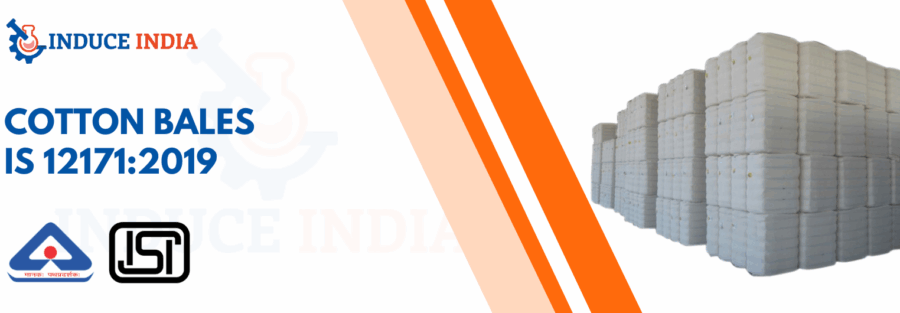
The Cotton Sector – The backbone of the Indian Textiles Industry
India is one of the largest producers and exporters of cotton in the world. Cotton has to go a long way from fields of Gujarat and Maharashtra, to the spinning mills of Tamil Nadu and Telangana, to reach the end consumer in the form of a garment. The most important part of this trip is a process in which harvested cotton is compressed into small, neat units called cotton bales and is ready for storage, transportation, and sale.
Raw cotton is sold and traded in the country in cotton bales, which are the standard unit of trade in India, and exported internationally. The size of the cotton trade in the country necessitates these bales to attain a specific standard of quality, weight and packaging. This is exactly what IS 12171: 2019 – Indian Standard for Cotton Bales focuses on.
Our team at Induce India works with businesses all along the textile and agriculture value chain to help them clarify and adhere to standards such as IS 12171:2019. This blog outlines what the standard entails, why it is important and what it means for all involved in the cotton trade.
So, what is a Cotton Bale?
After cotton is harvested, it goes through a process called ginning, where the cotton fibre is separated from the seeds. The clean cotton fibre (called lint) is then pressed under high pressure into a large compact rectangle. The block is very tightly wrapped around and strapped with metal or synthetic straps. A block of cotton, compressed into a package, is called a cotton bale.
Cotton bales enable the storage and transport of large quantities of raw cotton that are both convenient and efficient. Each bale will have a substantial amount of cotton fibre, which must be handled and prepared for storage and long-distance transport with care to ensure the preservation of fibre quality.
What Is IS 12171:2019?
IS 12171:2019 is an Indian Standard issued by the Bureau of Indian Standards (BIS), which lays down the specification for cotton bales for trade and commerce in India. This standard has been updated and revised in 2019 and is suitable for the market and meets the needs of both domestic and export markets.
The standard applies to bales made from ginned cotton lint and includes standard bales’ size, packing, physical characteristics, weight, wrapping material, and bales’ marking requirements for each bale.
Key Requirements under IS 12171:2019:
- Bale Weight: The standard sets a range within which each bale of cotton should weigh to be tradeable. Cotton is traded on a weight basis, so any deviation is important and can result in disagreements between buyers and sellers.
- Bale Dimensions: IS 12171:2019 specifies the acceptable length, width and height of a finished cotton bale. Efficient loading and unloading into transport methods and containers, as well as warehouse storage and efficient stacking, are achieved by uniform dimensions.
- Cotton will absorb moisture from the environment. Too much moisture will make the bales weigh more than they should and, over time, will affect the quality of the fibre by attracting mould. The standard limits moisture levels to prevent detrimental effects to cotton quality and ensure fair trade.
- Wrapping material: the outside material of a cotton bale should be of good strength and can protect the cotton from contamination, dirt and physical damage during handling. The standard sets forth acceptable wrapping material types and quality.
- Strapping and Binding: They are bound and strapped together with metal or synthetic straps of cotton bales. The number of straps to be used, their proper application and their minimum strength to hold the bale together on the journey from the gin to the buyer are specified in IS 12171:2019.
- Cleanliness and Contamination: Cotton inside the bale has to be clean from any foreign materials such as Plastic bits, Jute fibre, leaves or any other material that is not cotton. Cotton is one of the most susceptible commodities to contamination, and if contaminated becomes unusable for spinning. Cleanliness is stressed throughout the standard.
- Bale Marking: Each bale should be distinctly identified with the gin, cotton grade, bale number, gross weight and net weight. Complete traceability of each bale throughout the supply chain is guaranteed by accurate marking.
Why is IS 12171:2019 relevant to the Cotton Industry?
The standard helps to prevent bales from being rejected by buyers and trading houses due to issues like insufficient fibre quality, poor fibre size, or other cotton quality concerns.
Compliant bales means that textile mills and spinners can rely on accurate weight, moisture and cleanliness of the cotton – all of which affect the yarn quality they produce.
Bales conforming to IS 12171:2019 are more likely to be accepted in overseas markets where quality documentation and traceability are a prerequisite. Non-compliant bales could result in a loss of income.
Traders and warehouse operators can also benefit from the uniform bale size and weight, as it provides for efficient and cost-effective storage and logistics in their operations.
Induce India can assist in compliance with IS 12171: 2019.
Induce India offers industry expertise to cotton ginners, exporters, textile industries and cotton traders for adherence to IS 12171:2019. We assess your existing baling and packaging operations and find the compliance issues you may have and put the proper systems in place. We also support with documentation, quality audits and can help with any BIS-related certification requirements that your business might need.
Conclusion
Although the cotton bale appears to be a simple entity, IS 12171:2019 is crucial for ensuring quality, fairness, and efficiency in the cotton industry in India. Adhering to this standard benefits both the ginner and the mill owner, exporter, and/or trader and reinforces the whole supply chain.
Talk to Induce India today for professional assistance for IS 12171:2019 and all your BIS compliance requirements.